
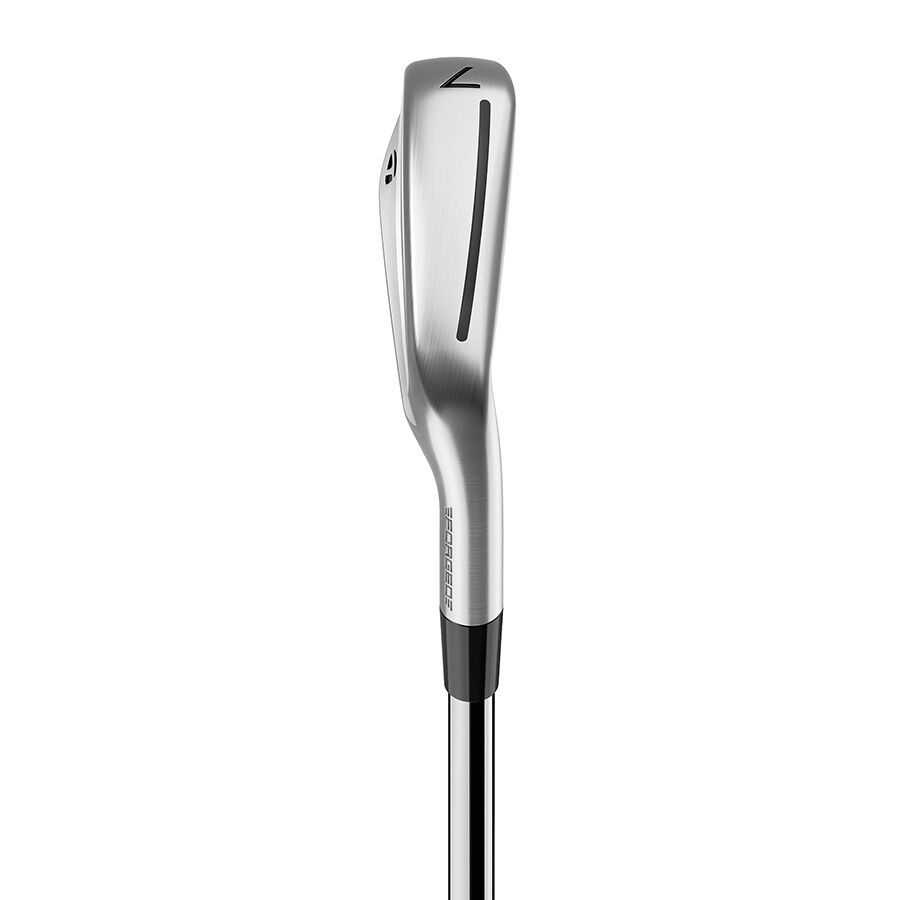
Choose an iron shaft by its total weight, flex profile, length, balance and how consistently you deliver it—not by material alone. Steel usually offers a familiar, substantial feel and many weight choices; graphite can be lighter and may reduce transmitted vibration. Either can perform well when it fits the golfer.
Karibu’s TaylorMade P790 listing offers steel and graphite selections, making it a useful real-world example. This guide helps you ask the right questions before ordering in Kenya.
The short answer
Choose steel if you prefer its feel, find a weight you can repeat and see better strike and dispersion with it. Choose graphite if a lighter build, different feel or reduced vibration helps you swing and strike the ball more consistently. Do not choose graphite only because of age, or steel only because stronger players use it.
Two shafts made from the same material can behave very differently. Always get the exact manufacturer, model, weight and flex.
What changes when you change shaft material?
The shaft is part of the club’s delivery system. Changing it can alter total weight, balance, how the club loads during the swing, impact feel and the golfer’s timing. It may also change launch and spin, but the result is personal rather than guaranteed.
A shaft does not independently create a good ball flight. Clubhead design, loft, length, lie, strike location, speed and delivery all contribute. That is why a material-only comparison is incomplete.
Why golfers choose steel iron shafts
Steel shafts are common in iron sets because they can provide:
- A stable and familiar feel for many players.
- A wide range of weights and flex profiles.
- Clear feedback about strike location.
- Consistent manufacturing at many price points.
- A build that some golfers find easier to sense throughout the swing.
The tradeoff is that a heavier steel option may tire a player or make it harder to create comfortable speed. Steel can also transmit more impact vibration than some graphite constructions. Those are tendencies, not universal outcomes. Modern lightweight steel and heavier graphite overlap, so “steel is heavy” and “graphite is light” are not complete rules.
Why golfers choose graphite iron shafts
Graphite shafts can provide:
- Lower total weight in many available models.
- A smoother or different impact sensation.
- Reduced vibration for some players.
- More design freedom for weight and bend profile.
- An option for golfers who maintain better tempo and contact with a lighter club.
Graphite is not automatically soft, inconsistent or only for slow swings. Premium graphite iron shafts are made in a wide range of weights and profiles. The important question is whether the exact model gives you repeatable contact and useful ball flight.
Does graphite always launch higher?
No. Shaft makers can design both steel and graphite models for different launch windows. A lighter graphite shaft may help one golfer launch the ball higher because they deliver more speed or dynamic loft, while another golfer may see little change.
Treat launch descriptions such as low, mid or high as comparison guidance within a manufacturer’s range, not a guaranteed flight. The clubhead and golfer still matter.
How shaft weight affects your irons
Weight is often more useful than the steel-versus-graphite label. A shaft that is too heavy may make it difficult to complete the swing or maintain contact late in a round. A shaft that feels too light may reduce awareness of the clubhead or disrupt tempo.
When comparing, hit enough shots to get past the excitement of the first few swings. Note:
- Centre-contact frequency.
- Carry-distance consistency.
- Left-to-right dispersion.
- Peak height and landing angle.
- How your tempo feels.
- Whether effort increases after several swings.
The best result is the setup you can repeat, not the single longest shot.
Steel vs graphite in the TaylorMade P790
TaylorMade lists the 2025 P790 with several steel and graphite configurations, depending on market and custom availability. The head remains a players-distance design, but the shaft can materially change total club feel.
On Karibu’s product page, choosing Steel shows Regular and Stiff flex. Choosing Graphite shows Regular, Stiff and Senior. The Senior option is intentionally restricted to graphite so the order enquiry matches the available configuration logic.
Before paying, ask Karibu to confirm:
- Exact shaft brand and model.
- Shaft material and stated weight.
- Flex printed on the shaft.
- Club length and whether it is standard or altered.
- Right- or left-handed head.
- The seven included clubs.
- Photographs of the actual set.
Use the P790 product configurator to send your preferred setup, then wait for exact stock confirmation.
What if you have elbow, wrist or shoulder discomfort?
Some golfers prefer the vibration-damping feel of graphite, but equipment is not medical treatment. Pain can come from technique, practice volume, an injury or several other causes. Stop if a swing hurts and seek appropriate medical or coaching advice.
If you return to play, compare complete club builds rather than assuming any graphite shaft will solve discomfort. Grip size, club length, swing weight and impact quality also affect feel.
Does Kenya’s weather change the choice?
Normal Kenyan playing conditions do not create a rule that one shaft material is required. Heat, rain and humidity can affect grip, comfort and course conditions, but shaft selection still comes back to fit and repeatability.
Maintain the clubs properly: dry them after wet rounds, inspect grips, avoid leaving equipment in extreme heat for long periods and use a bag that protects shafts from repeated impact.
A simple decision process
- Start with a comfortable total weight.
- Compare at least one steel and one graphite option if available.
- Keep head model, loft and length as similar as possible during the comparison.
- Judge a group of shots, not the best shot.
- Check carry gaps and dispersion.
- Confirm the exact shaft in the set you will receive.
- Choose the option that makes a repeatable swing feel natural.
If you cannot test, be conservative. Use a specification you already know, ask detailed questions and avoid buying from a flex label alone.
Frequently asked questions
Are graphite iron shafts better for senior golfers?
They can be useful because many graphite models are lighter and damp vibration, but age does not determine the correct shaft. Strength, tempo, delivery, contact and comfort matter more.
Do professional golfers use graphite iron shafts?
Some do, while many use steel. Professional usage does not determine what fits a recreational golfer. Choose from your own results.
Are steel shafts more accurate?
Not automatically. Accuracy depends on the complete club and golfer. A shaft that improves face contact and delivery can tighten dispersion regardless of material.
Can I choose Senior flex in a steel P790 set from Karibu?
The current Karibu selector offers Senior flex with graphite only. Steel shows Regular and Stiff. Ask the team if you need a configuration not shown.
Should every iron have the same shaft?
Most matched sets use the same shaft family with progressive club lengths, but specialist mixed builds exist. Do not create a mixed set casually; check weight, balance and distance gaps with a fitter.
Sources and verification
- TaylorMade: official 2025 P790 specifications and shaft references
- Karibu Golf: live P790 shaft and flex selector
- TaylorMade: P-Series iron comparison
Manufacturer configurations and Karibu options checked 29 September 2026. Exact shafts can vary by market and stock.
Talk to Karibu Golf